Ethical dilemma #018
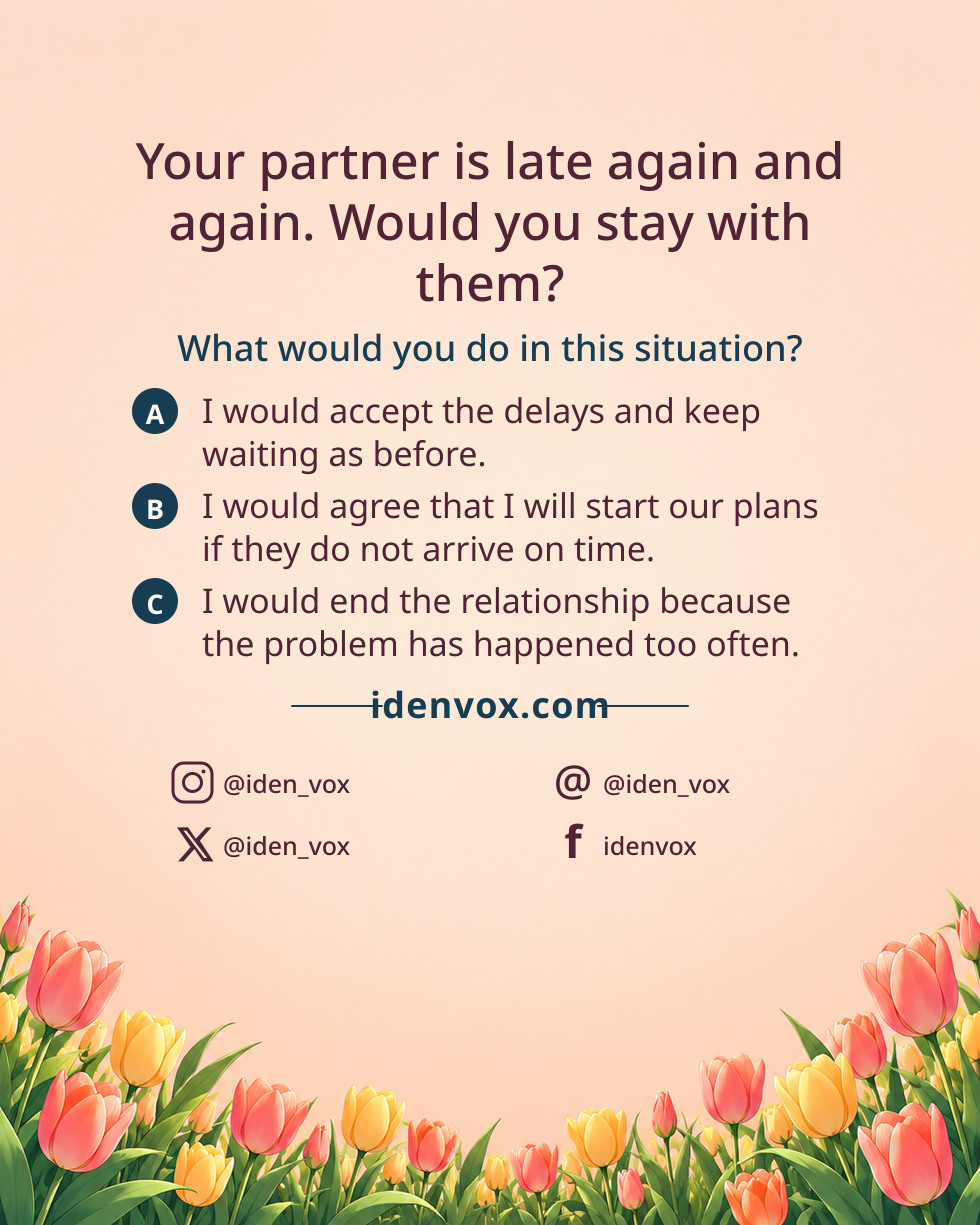
Your partner is late again and again. Would you stay with them?
Your partner is affectionate and reliable, but often arrives half an hour late. You have discussed it several times, and today you are waiting at a restaurant again.
Related reflectionA Good Relationship Does Not Need to Be Perfect↗What would you do in this situation?
Choose an answer before continuing.
The context
Your partner treats you affectionately, honors important agreements, and is there when you need help. However, they often arrive half an hour late to dinners and gatherings with friends. You value punctuality and resent spending time waiting.
You have discussed the problem several times. Sometimes they have improved, but today you are waiting alone in a restaurant again. When they arrive, they apologize and say they misjudged the time. You can accept it as a flaw you will live with, agree that you will start plans without waiting, or end the relationship. You want your time respected, but also wonder whether this problem outweighs the other good things you share.
A perspective to continue
Accepting a flaw and resigning yourself to something that hurts are not the same. What agreement could care for both of you without demanding that either be perfect?
04
What your decision prioritizes
You avoid further arguments over this problem. You might build up resentment if you are not really willing to accept it.
You protect your time without demanding immediate perfection. Both of you would need to accept the consequences of that agreement.
You give considerable weight to respect for your time. You also give up other aspects of a relationship you value.
How other people responded
Percentages will appear after enough responses have been collected.
0 recorded decisions
05
Your partner suggests setting two alarms and letting you know before leaving. They also point out that you have canceled several plans at the last minute to take on extra work.
Now that you know this, would you keep your decision?
Keep my decision
The new information does not change what you had decided. Consider whether your original reasons still hold in light of what you have just learned.
Change my decision
What you have just learned leads you to choose a different response. Which detail changed how you see the situation?
I need to know more
The new information leaves you with an important question. What would you need to ask before acting?
0% changed their mind after learning the new context
More dilemmas to consider