reflections / Values and character
Owning Our Mistakes Changes How We Judge Others
Remembering your own mistake can change the tone you use about someone else's. You know what it is to act badly, feel ashamed, and need a chance to repair things. That does not erase harm or oblige you to trust again. It can help you demand responsibility without reducing a person to their worst action. A fairer judgment sometimes begins by remembering that you have needed understanding too.
Remembering your own mistakes can help you judge others more fairly. You can ask them to repair harm without reducing them to the worst thing they did.
The context
When someone else makes a mistake, we often see only what they did. When we make one, we also remember feeling afraid, tired, or confused. That can make us harder on others.
We say we reacted badly because we were exhausted, but call someone else selfish. Repeated behavior may give us reason not to trust someone, but one incident does not always tell us what they are like.
If someone forgets a commitment, you might call them irresponsible. If you forget, you remember your difficult week. You do not have to invent an excuse for them. Ask what happened and explain how it affected you.
Remembering your mistakes does not mean all mistakes are equally serious. Forgetting an appointment is not the same as hurting someone. It means admitting you may not know everything that happened, while still asking for an explanation and for the harm to be put right.
Understanding what happened does not require forgiveness or renewed trust. If the harm continues, you can step away. You can care for the person who was hurt and look for changes in actions, not just words.
FAQ
Questions and answers
Editorial questions and examples inspired by public discussions. They are not reader testimonials.
Dilemmas from this reflection
Put this idea to the test
Explore situations where this reflection does not have a simple answer.
#019The team wants to fire a coworker for a mistake you also made. Would you support dismissal?A coworker sent an order incorrectly and caused a loss. The team wants them fired, but you made the same mistake a year ago and nobody discovered it.
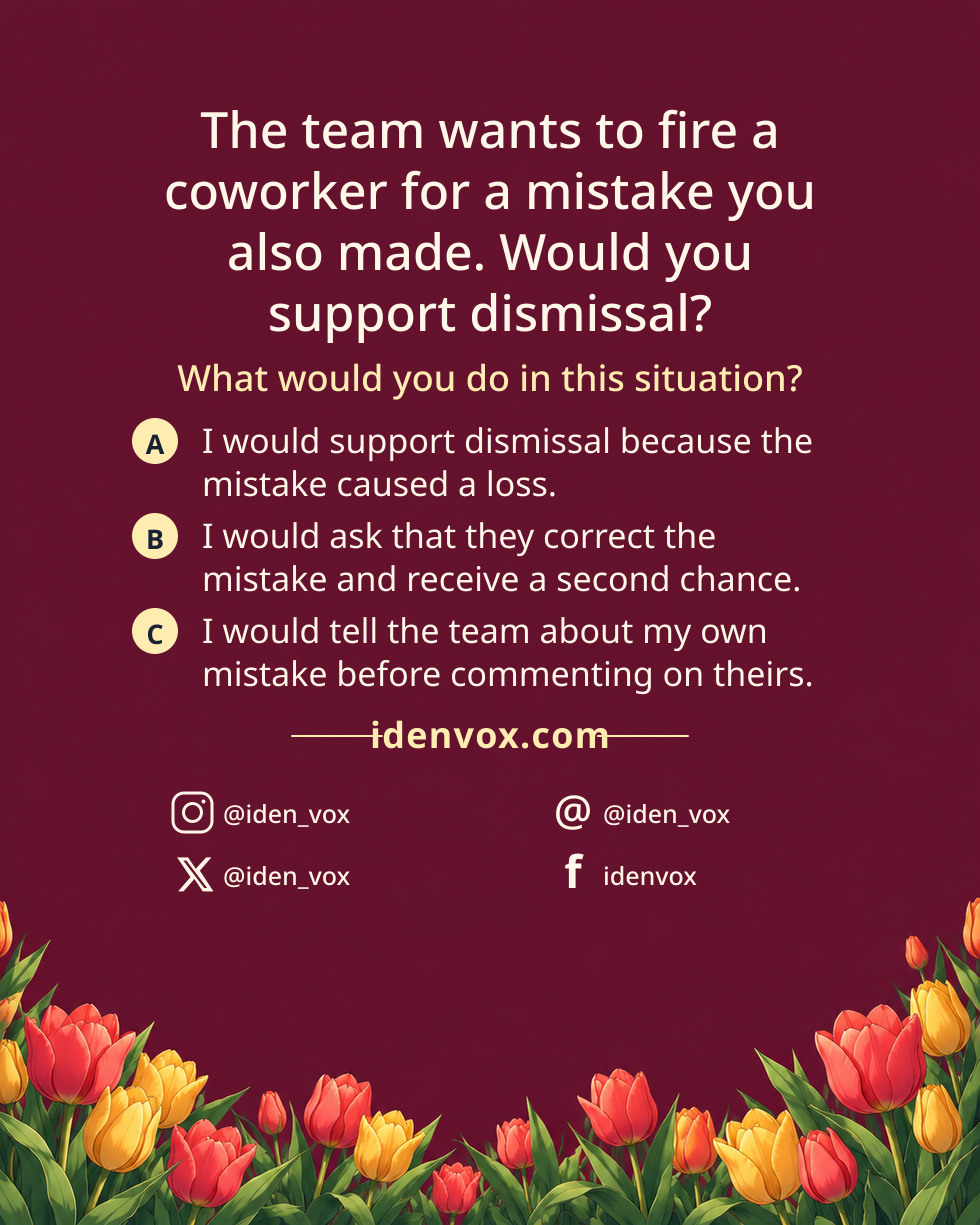
The mistake caused a loss and needs a response. Remembering your own may help you be fairer, but may also make you want to avoid a necessary consequence.
You may also like


0 approved comments
Reader opinions
Be the first person to share a perspective.