reflections / Personal boundaries
You Cannot Make Someone Change if They Deny the Problem
You can care deeply about someone and still be unable to make them change. If they do not acknowledge the harm their behavior causes, insisting again and again can leave you exhausted without resolving anything. You can explain what is happening, say how it affects you, and offer support. But you cannot make the decision to take responsibility for them.
Recognizing a problem does not mean knowing how to solve it immediately. It means being willing to look at it and begin doing something differently. Until that willingness is there, you still have the right to set boundaries. Helping someone does not oblige you to keep putting up with behavior that hurts you.
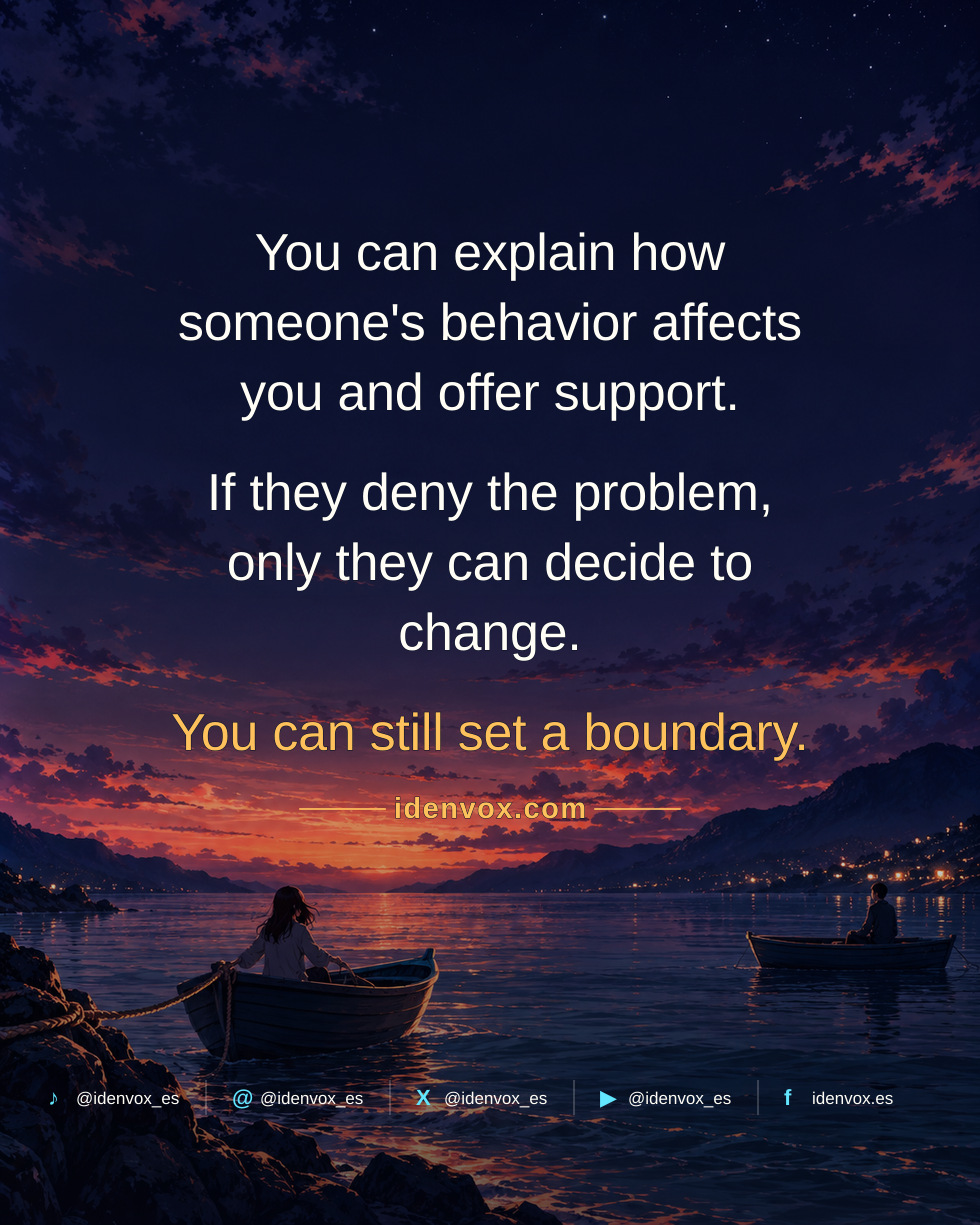
You can explain how someone's behavior affects you and offer support. If they deny the problem, only they can decide to change. You can still set a boundary.
Helping has a limit: change requires the other person to recognize what is happening.
The context
Recognizing a problem does not mean knowing how to solve it immediately. It means noticing what we do and the harm it causes. As long as someone denies that harm, they may interpret a comment as an attack, an exaggeration, or an attempt at control, even when it comes from legitimate concern.
Outside help can provide information, company, and resources, but it cannot replace personal responsibility. When we keep insisting to convince someone, it is easy to enter an exhausting cycle: one person pushes, the other defends themselves, and both end up arguing about who is right instead of looking at what is happening.
It also helps to distinguish between not recognizing a problem and not knowing how to change. Someone who admits that something is harmful, even if they still struggle, can already ask for support, try alternatives, and make small commitments. Someone who completely denies the impact of their behavior has not yet reached the point from which they can begin a voluntary change.
Accepting this limit does not mean abandoning someone or becoming indifferent. It allows for more honest help: saying what we observe, explaining how it affects us, offering specific support, and deciding what boundaries we need if nothing changes. We can then stop trying to direct someone else’s life and take responsibility for our own decisions.
FAQ
Questions and answers
Editorial questions and examples inspired by public discussions. They are not reader testimonials.
Dilemmas from this reflection
Put this idea to the test
Explore situations where this reflection does not have a simple answer.
#033Your roommate takes your food without asking and says you overreact. Would you keep living with him?Your roommate takes your food without permission. You have discussed it several times, but he says you are overreacting and does it again.

You do not want to break up a friendship over food. Continuing to live together this way also means bearing an expense and inconvenience your friend does not acknowledge.
You may also like


0 approved comments
Reader opinions
Be the first person to share a perspective.