reflections / Relationships
When Avoiding a Conversation Damages Trust at Work
Sometimes the hardest part of working together is not disagreeing. It is deciding that talking will make no difference. We keep our frustration quiet, ask someone else to help, and make plans without the person involved. It can feel faster, but the real problem is still there.
When we stop speaking plainly, we start working with guesses: what the other person will think, do, or refuse. A shared task can slowly turn into a silent contest.
Before making plans without including the person involved, try one clear conversation. Describe what is not working, how it affects the work, and what you need to change. Ask how the situation looks from their side. You may not agree right away, but honest words replace assumptions with useful information and help everyone choose fair next steps.
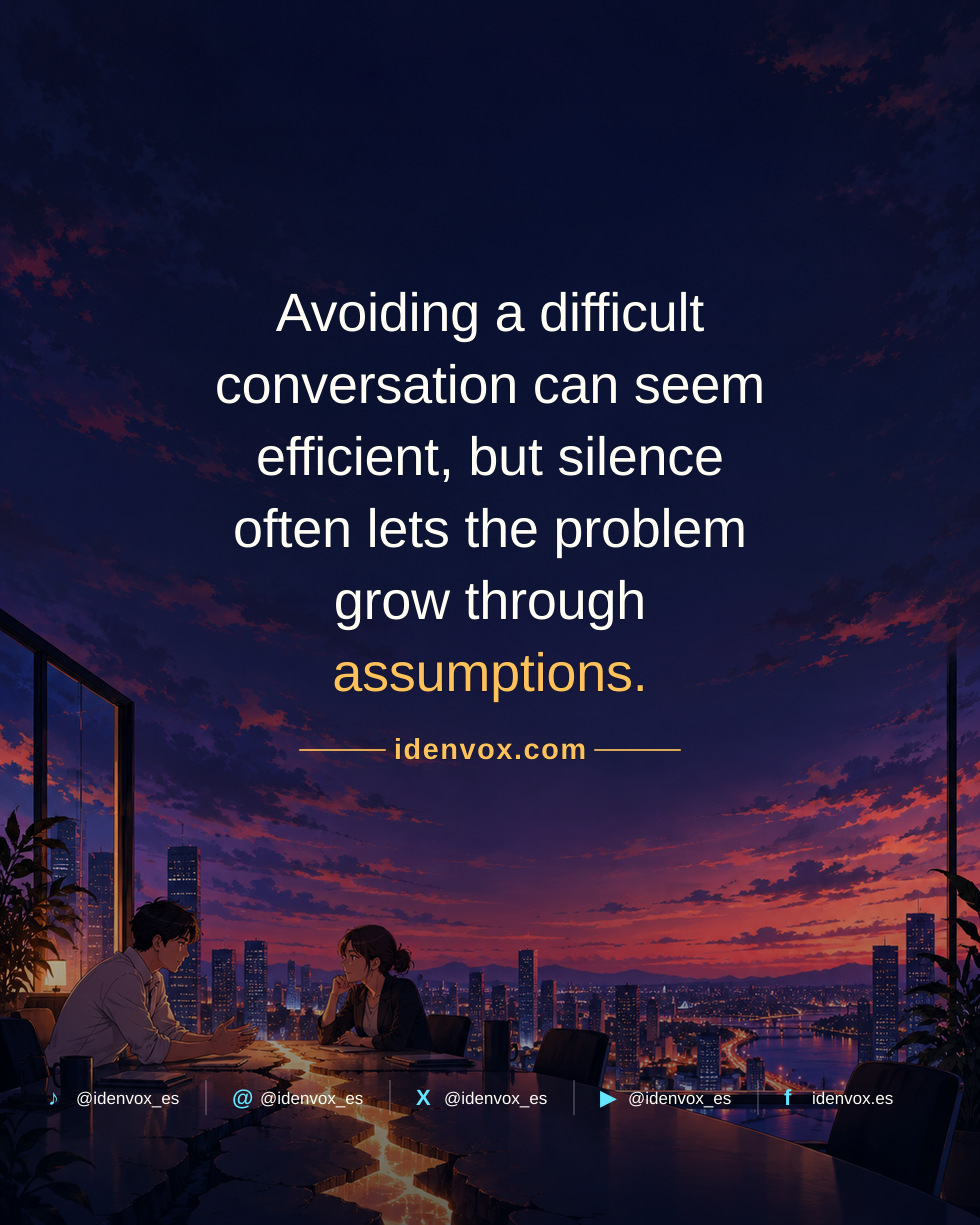
Avoiding a difficult conversation can seem efficient, but silence often lets the problem grow through assumptions.
Avoiding a difficult conversation can seem efficient, but silence often lets the problem grow through assumptions.
The context
People avoid difficult conversations for understandable reasons. Perhaps an earlier attempt ended badly; perhaps they worry that raising a concern will sound like an accusation or invite defensiveness. Silence may seem like protection, yet it can also let resentment accumulate and make every new interaction feel like evidence that nothing will change. A useful conversation does not require a perfect speech. Choose a calm moment and describe a specific event rather than judging someone’s character. Explain what happened, how it affected the shared work, and what you would like to be different next time. Then listen before deciding what the response means. You may learn something you did not know, or discover that clearer agreements are needed. Directness cannot guarantee agreement or change. Its value is that it replaces guesses with information and gives both people a fair chance to respond. If there is a serious power imbalance or risk of retaliation, seeking support and setting boundaries may be safer than handling the conversation alone.
FAQ
Questions and answers
Editorial questions and examples inspired by public discussions. They are not reader testimonials.
You may also like
0 approved comments
Reader opinions
Be the first person to share a perspective.