reflections / Emotional balance
Excessive Optimism Can Make Disappointment Harder
Hope does not require believing everything will go your way. When you treat an outcome as certain, any difficulty can feel unfair or like a failure. You can want something to work while recognizing that it may need more time or a change of plan. Preparing for difficulty does not make you pessimistic. It lets you keep trying while knowing what other options you have if things do not go as expected.
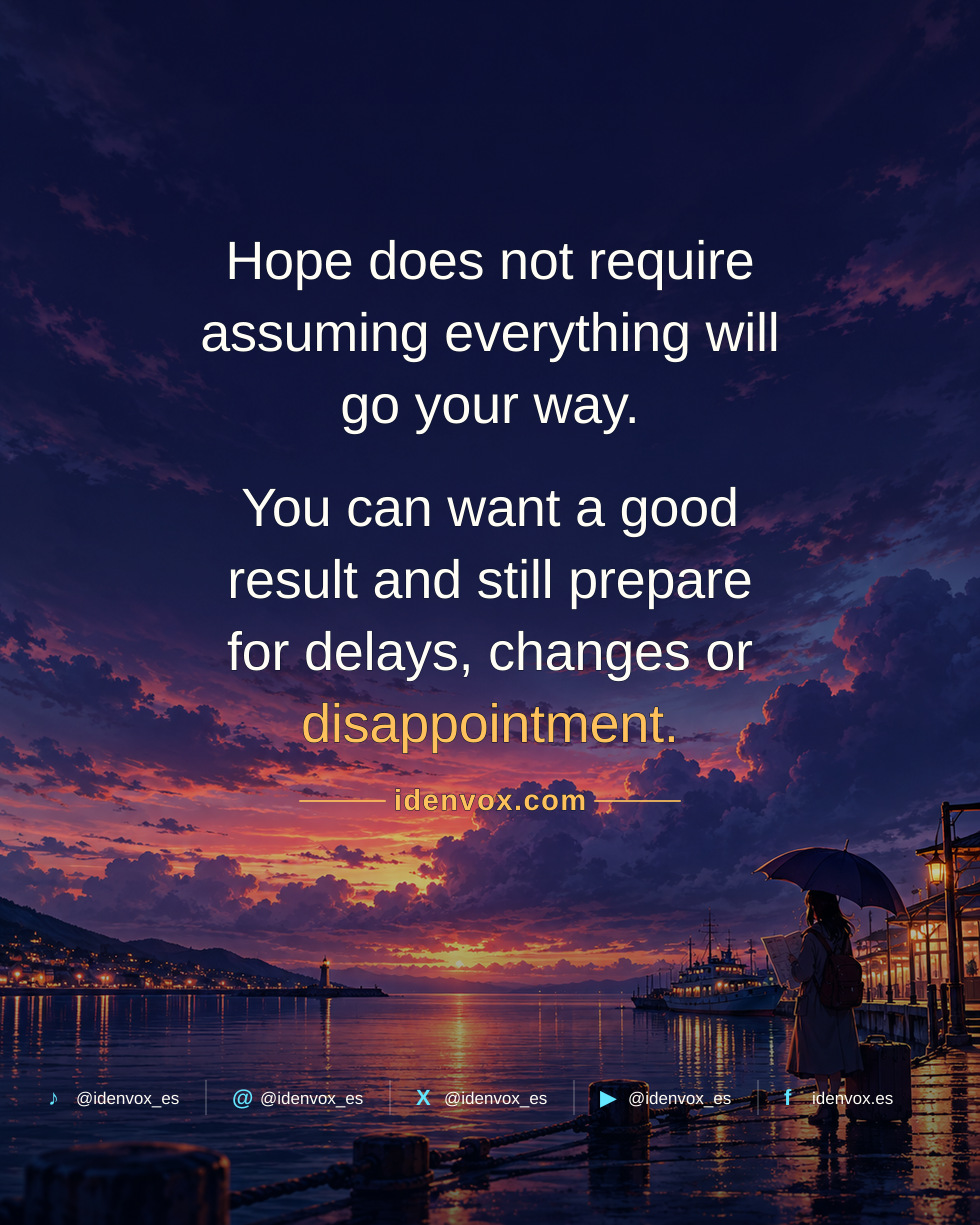
Hope does not require assuming everything will go your way. You can want a good result and still prepare for delays, changes or disappointment.
The context
Hope helps us act amid uncertainty. Trouble begins when it becomes a guarantee: we believe effort or positive thinking should ensure the outcome.
Sometimes the message that anything is possible becomes a demand that everything must work out. When it does not, we lose something we wanted and also feel that a promise has been broken. Disappointment becomes harder because an ordinary life seems as though it should not include setbacks, delays or other people's decisions that do not favor us.
You can prepare carefully for an interview and still not get the job. If success seemed inevitable, rejection may feel like a personal verdict. Considering other outcomes lets you use what you learned and keep options open without denying disappointment.
It can also be difficult to discuss doubts when those around us insist on a positive attitude at all times. Someone who is worried may be told to cheer up before anyone listens to what is happening. Acknowledging a difficulty makes it possible to find appropriate help; hiding it to preserve enthusiasm can leave it unattended.
Preparing an alternative does not weaken commitment to the first attempt. If a project depends on approval, you can work seriously while also deciding how long you will wait or what you will do if the answer is no. That preparation does not remove the loss, but it keeps one outcome from having to support your entire future.
Realism does not require expecting the worst. Separate what you can do from what depends on others and prepare a reasonable next step. Flexible expectations leave room for sadness, support, and adjustment without declaring everything lost.
FAQ
Questions and answers
Editorial questions and examples inspired by public discussions. They are not reader testimonials.
You may also like
0 approved comments
Reader opinions
Be the first person to share a perspective.